Cosmetic Stretch Mark Camouflage Tattoo
Stretch mark camouflage tattooing (also known as Brazilian camouflage or paramedical micropigmentation) uses custom-blended skin-toned pigments to blend mature white/silver stretch marks seamlessly with your surrounding skin tone. It dramatically reduces their visibility without removing the marks or significantly altering texture.
Award-winning, unrivalled medical expertise
-
Outstanding approach to client care. We’ve consistently delivered unrivalled, personalised client care. If you have a concern, you can trust us to solve it.
-
Exceptional standards you can trust. Our market-leading medical, safety and training protocols and strict industry regulation means you can trust that your safety and clinical care is our priority.
-
We are proud to be a leading skin clinic group. We’ve treated millions of clients, improving their self-confidence for the better – with millions of life-changing results.


Cosmetic Stretch Mark Camouflage Tattoo
Cosmetic stretch mark camouflage tattoo, also known as Brazilian stretch mark camouflage or paramedical scar camouflage, is a specialized cosmetic tattooing technique designed to minimize the visibility of stretch marks. It involves depositing custom-blended, flesh-toned pigments into the skin to match the surrounding natural skin tone, effectively blending the hypopigmented (white or silver) stretch marks and making them far less noticeable.This method gained popularity through Brazilian tattoo artists like Rodolpho Torres but is now widely practiced globally. It does not remove stretch marks or alter their texture significantly—it camouflages their color contrast. Some practitioners combine it with preparatory treatments like dry needling (inkless MCA) or microneedling to smooth raised or indented scars first.
Who Is a Good Candidate?
-
Best for mature, white/silver stretch marks (striae alba), which are older and have lost pigmentation.
-
Not suitable for red/purple stretch marks (striae rubrae), which are newer and inflamed—these often require regeneration treatments first.
-
Works on various body areas: abdomen, thighs, hips, buttocks, breasts, arms.
-
Effective across skin tones, though results can be more dramatic on darker skin due to higher contrast; challenges exist with very dark or keloid-prone skin.
-
Stretch marks should be at least 1–2 years old and fully healed.
The Procedure
-
Consultation: The artist assesses skin tone, stretch mark stage, and texture. Custom pigments are mixed to match your natural (untanned) skin.
-
Preparation: Topical numbing cream is applied. Some cases involve pre-treatments to flatten the skin.
-
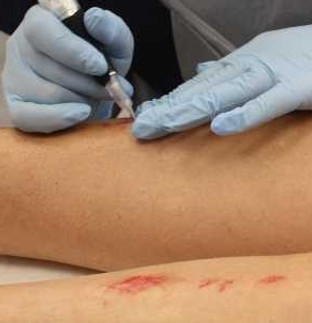
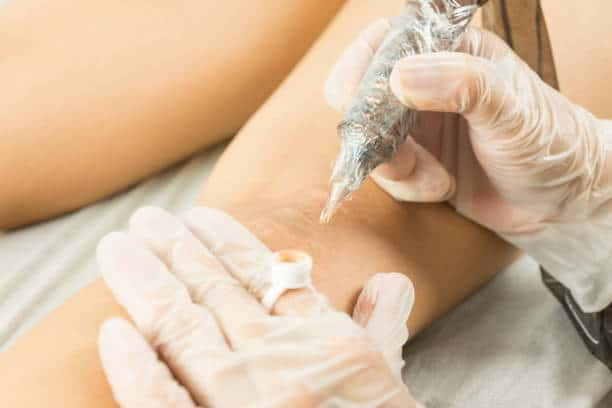
Tattooing: Using a tattoo machine or rotary pen, pigments are implanted into the dermal layer over the stretch marks. Sessions last 1–3 hours.
-
Sessions Needed: Typically 2–4, spaced 8–12 weeks apart for healing and color settling.
-
Pain Level: Mild to moderate (like scratching); numbing helps.